

Online Carnatic Music Classes
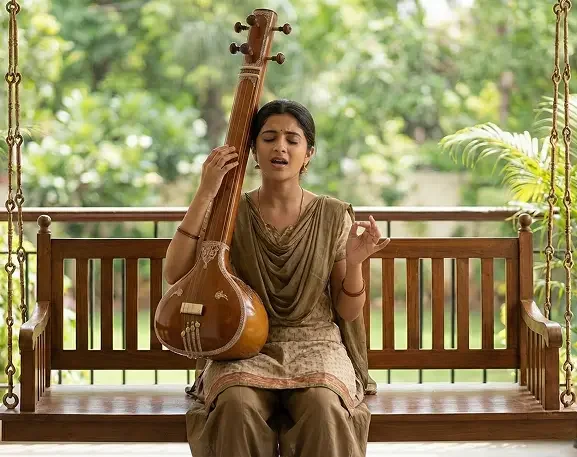
Whether a child is completely new to Carnatic music or has some exposure, our classes focus on building strong fundamentals first—because Carnatic music demands clarity, discipline, and deep musical understanding.
-
Our Carnatic Vocal curriculum is carefully researched and systematically designed to ensure steady growth without overwhelming the student. Learning is divided into progressive levels, helping students move from basic voice culture to confident classical singing.
Students are trained in:
Voice culture and sruti alignment
Swara exercises and rhythmic clarity
Introduction to tala and laya concepts
Compositions taught step-by-step with meaning and structure
Each concept is reinforced gradually, allowing students to internalise both theory and practice.
-
While the foundation remains authentic and traditional, our teaching methods are adapted for today’s learners. Classes are interactive, paced thoughtfully, and focused on consistent improvement rather than rote repetition.
Students are encouraged to listen, understand, and express — not just memorise.
-
Our Carnatic vocal instructors are trained to work with children and beginners, ensuring correct technique from the start. Emphasis is placed on voice safety, clarity, and discipline, which are essential for long-term Carnatic training.
Why Parents Choose Voxtune Music Academy
Carnatic vocal learning helps children develop:
Strong listening and concentration skills
Patience, discipline, and emotional depth
Cultural awareness and musical sensitivity
A solid foundation for advanced classical training
These skills naturally support academic learning and personal growth.
Types of classes
-
(4 Sessions per Month · 1 Hour Each · Max 4 Students)
Our small-group Carnatic vocal classes offer a balanced learning environment where children learn classical music in a supportive and disciplined setting while still enjoying peer interaction.
With only four students per batch, learners develop sruti alignment, swara clarity, and rhythmic awareness through guided group exercises and basic compositions. Singing alongside peers improves listening skills, musical discipline, and confidence in classical presentation.
Ideal for parents looking for structured classical training with healthy peer learning and strong fundamentals.
Best for: Beginners and children who benefit from group learning in a classical setting.
-
(4 Sessions per Month · 30 Minutes Each)
Designed for young beginners, these one-on-one Carnatic vocal classes introduce classical music through short, focused sessions that match a child’s attention span.
Each class concentrates on voice culture, sruti control, basic swara exercises, and simple rhythmic patterns, ensuring steady progress without overwhelming the learner. Parents prefer this format because it gently builds discipline while keeping the learning experience comfortable and enjoyable.
Ideal for parents who want to introduce classical music without pressure.
Best for: Ages 6–14 or first-time Carnatic learners.
-
(4 Sessions per Month · 1 Hour Each | Sibling / Parent-Child Option)
This plan provides deeper classical training with the added benefit of shared learning opportunities.
Longer sessions allow time for voice culture, detailed swara practice, tala understanding, and composition learning, along with personalised correction and guidance. The sibling or parent-child option encourages musical bonding while maintaining structured classical progression.
Parents choose this plan for focused training, flexibility, and meaningful musical engagement.
Best for: Serious learners and families who wish to learn Carnatic music together.
-
(8 Sessions per Month · 30 Minutes Each)
This plan emphasises frequency and consistency, which are essential for Carnatic vocal development. Regular short sessions help strengthen sruti stability, voice control, swara precision, and rhythmic discipline through continuous guided practice.
Parents prefer this option when they want steady technical improvement and long-term classical foundation without exhausting the child.
Ideal for students working towards stronger fundamentals, performance readiness, or higher-level classical training.
Best for: Dedicated learners aiming for faster progress and disciplined mentorship.
-
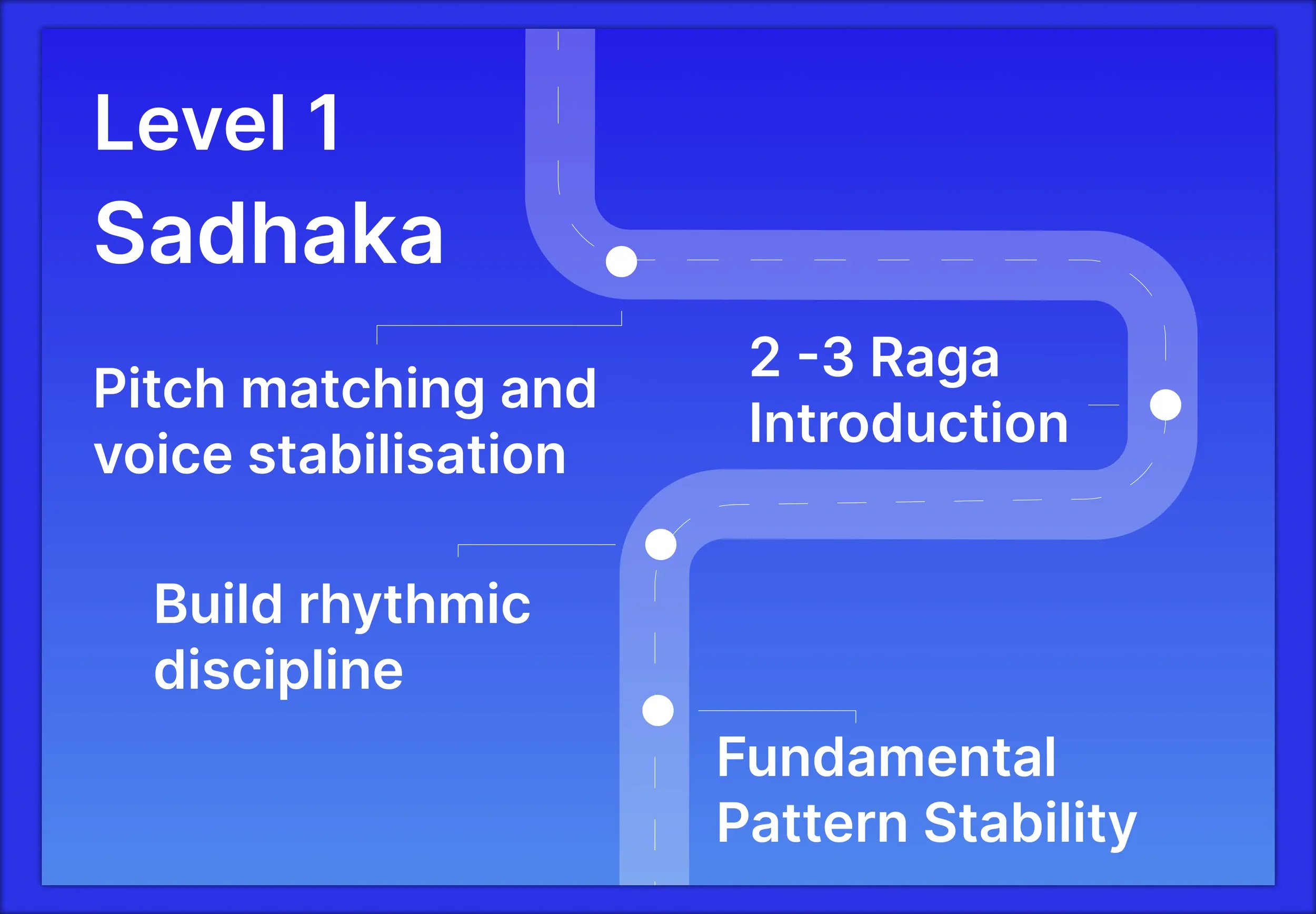
This stage builds the essential technical and musical foundation required for Carnatic vocal training.
Students begin with systematic voice training focused on pitch accuracy, rhythmic discipline, and listening development. Through structured practice of varisas and tala exercises, learners gain strong control over swara placement and tonal stability.
Approx Time Frame:- 5-6 Months
Core learning objectives include:
Pitch matching and voice stabilisation
Introduction to Swaras and 2 - 3 Ragas.
Systematic approach of learning Sarali Varisais (Fundamental Patterns) Stability while moving between adjacent notes
Jantai Varisais (Twin Swaras). Correcting pitch consistency during repeated notes
Tala exercises to build rhythmic discipline in multiple speeds
Introduction to shruti awareness and note-based ear training
Developing musical interest, concentration, and practice habits
Special emphasis is placed on clarity, accuracy, and perfection in fundamentals, ensuring a strong base for advanced classical learning.
Outcome:
A student develops stable pitch control, rhythmic awareness, disciplined practice habits, and readiness for structured Carnatic repertoire training
-
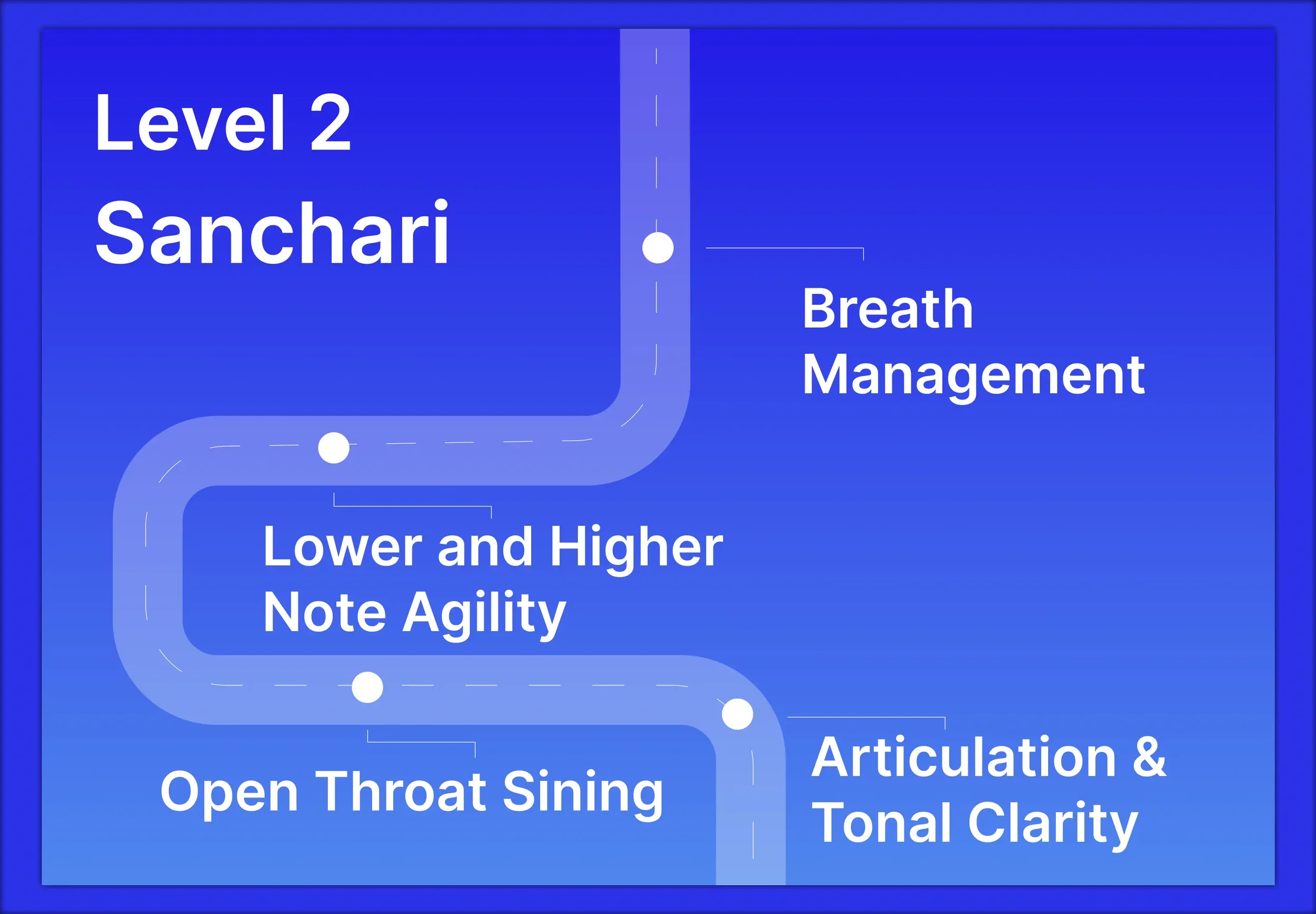
This stage focuses on expanding repertoire, raga understanding, and musical interpretation.
Students begin vocal range agility through Madhya Sthayi, Thara Sthayi and Mandra Sthayi Varisas. Listening skills and tonal precision are strengthened through intermediate ear training exercises.
Approx Time Frame:- 4-6 Months
Core learning objectives include:
Intermediate ear training and swara accuracy development
Stabilising Madhya Sthayi Varisais (Middle Octave focus) / Maintaining the "center" of the pitch in the middle range.
Thara Sthayi Varisais (Higher Octave) and Mandra Sthayi Varisais (Lower Octave) working on the agility of these focus points.
Open-mouth singing and facial relaxation.
Breath Management
Focused study of 2–3 foundational ragas
Strengthening rhythm alignment, articulation, and tonal clarity
Introduction to MTB Carnatic Vocal Grade Exam training
This level builds musical confidence, repertoire strength, and examination orientation, preparing students for formal classical assessments.
Outcome:
A student develops raga awareness, repertoire confidence, technical stability, and readiness for structured classical examinations.
-
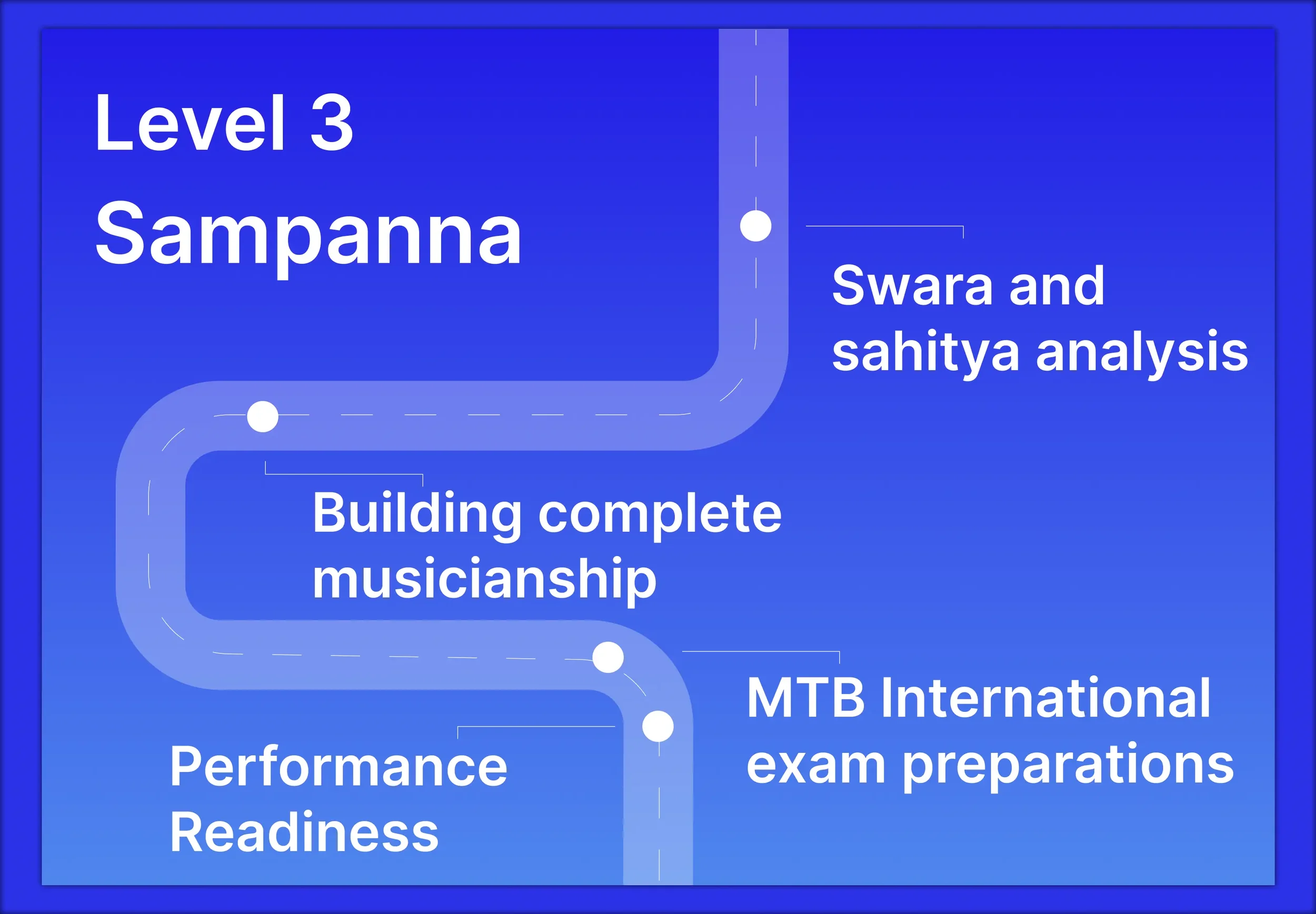
This stage focuses on advanced expression and musicianship.
Students work extensively on Geethams and Krithis, while learning the finer aspects of bhavam (expression), dynamics, articulation, and interpretative singing. Musical maturity, tonal refinement, and presentation skills are systematically developed.
Approx Time Frame:- 5-7 Months
Core learning objectives include:
Detailed learning of Geethams, and short Krithis
Swara and sahitya analysis for deeper lyrical and melodic understanding
Introduction to bhavam, expression, and dynamic control
Focused Note articulations practices.
Building complete musicianship and interpretative skills
Refining intonation, diction, phrasing, and tonal precision
Performance-oriented training and musical confidence building
Exam-focused preparation for Introductory levels of MTB Carnatic Vocal Exams
This level prepares students for examinations, and higher-level classical training.
Outcome:
A student becomes a technically sound, expressive, and performance-ready Carnatic vocalist with strong examination readiness and musical maturity.
Curriculum and Levels
Our Affiliations
Voxtune Music Academy is affiliated with MTB (Music Teachers’ Board) for Carnatic Vocal examinations.
This affiliation provides students with a structured and internationally recognised pathway for learning and assessment in Carnatic music. The MTB syllabus ensures systematic progression — from foundational exercises like Sarali Varisai and Alankaram to advanced compositions and manodharma elements — with clearly defined performance and theoretical standards at each grade.
Through MTB certification, students gain formal recognition for their training while preserving the depth, discipline, and authenticity of traditional Carnatic music learning.